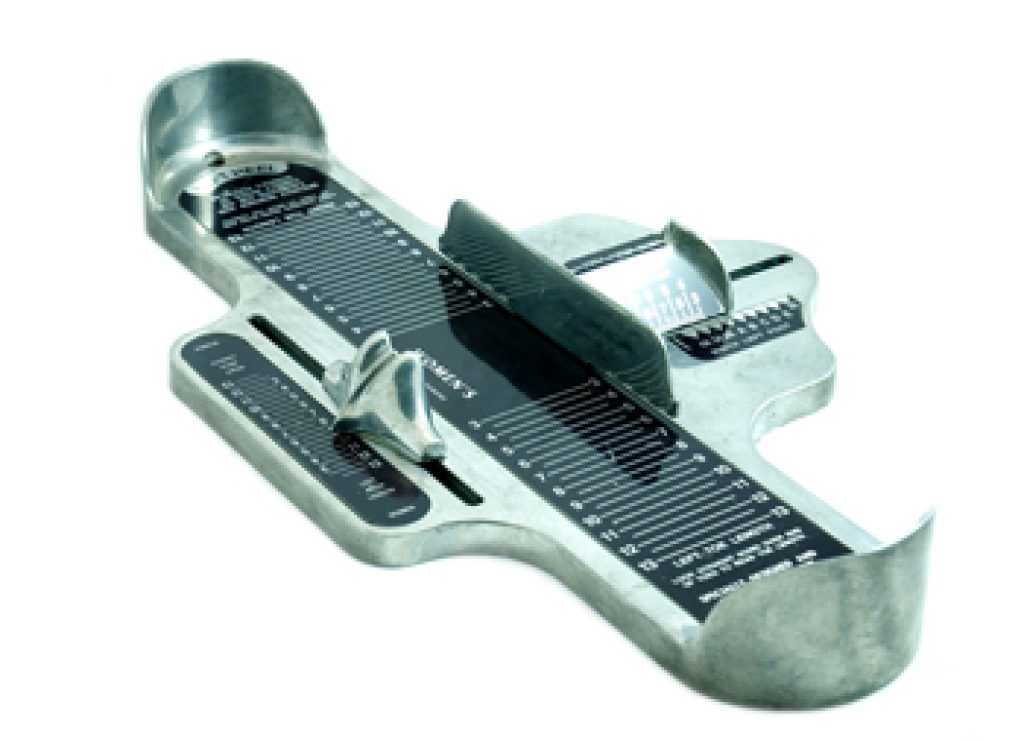
Brannock Device and Tracing the Feet

Research has indicated that nearly half of all women are wearing the wrong size shoe. Many women will notice their shoes don’t fit comfortably, and this can cause painful foot conditions to gradually develop. These common ailments can include hammertoes and bunions, in addition to consistent foot pain. To determine what the correct shoe size is, it is suggested that you place your foot on top of a piece of paper, and trace it while sitting down. This is followed by outlining the tracing with a straight line. After the foot is measured, it is important that you subtract 3/16 of an inch from the measurements. This is helpful in accommodating for the small area of extra space between the straight lines and your foot. Additionally, some people use a Brannock device, which is specifically designed to measure feet, and is found in most shoe stores. If you would like more information about how to correctly measure your foot to determine the correct shoe size, please confer with a podiatrist.

Getting the right shoe size is an important part of proper foot health. Seek the assistance of Queen Mbanuzue, DPM from In Step Podiatry Center. Our doctor will provide the care you need to keep you pain-free and on your feet.

Getting the Right Shoe Size

There are many people who wear shoes that are the incorrect size, negatively affecting their feet and posture. Selecting the right shoes is not a difficult process, so long as you keep several things in mind when it comes to choosing the right pair.

  • When visiting the shoe store, use the tools available to measure your foot.
  • Be sure there is ‘wiggle room’. There should be about an inch between your toes and the tip of your shoes.
  • Do not always assume you are the same size, as manufacturers run differently.
  • Purchase shoes later in the day, as your feet swell as the day progresses.
  • If a shoe is not comfortable, it is not suitable. Most shoes can’t be ‘broken in’, and comfort should be the ultimate goal when it comes to choosing the right pair of shoes

As our feet hold our body weight and keep us moving, it is important to treat them right. Picking the right pair of shoes can provide your feet comfort and mobility without pain.

If you have any questions, please feel free to contact our office located in Lanham, MD . We offer the newest diagnostic and treatment technologies for all your foot care needs.

Read more about Getting the Right Shoe Size: To Keep Your Feet Happy

Pregnancy and Problems with the Feet and Ankles

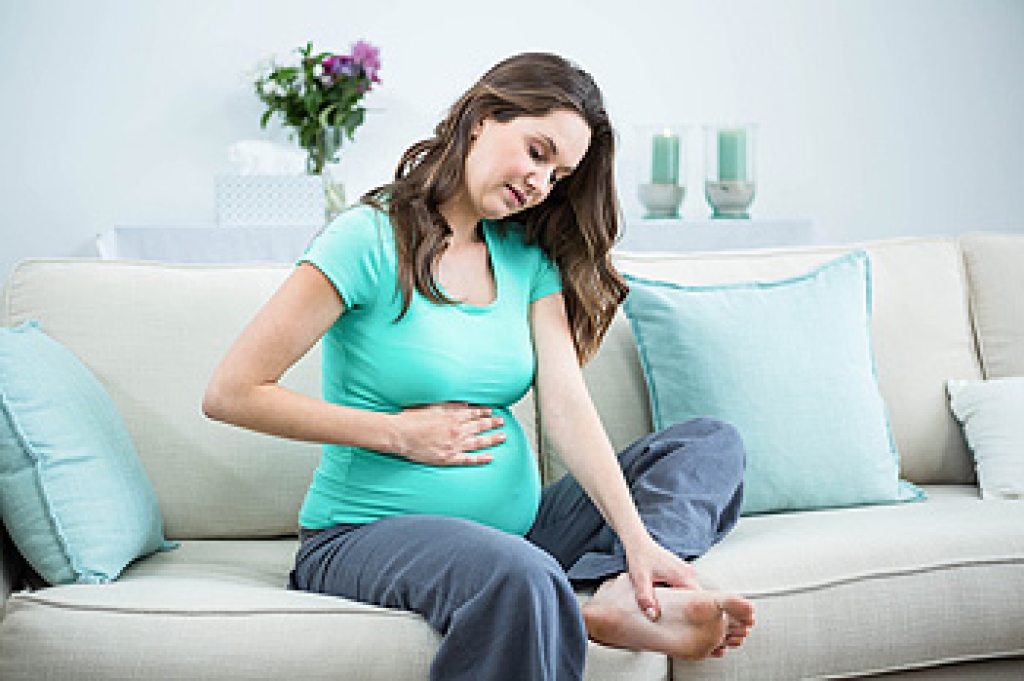
A woman’s body goes through many changes while they are pregnant, and the feet and ankles are often negatively affected. For instance, drastic hormonal changes and weight gain, and an increased amount of bodily fluids can cause uncomfortable swelling (edema) in the feet and ankles. Edema, as well as cramping and pain in the feet and calves, can also be caused by blood irregularities during pregnancy. Fallen arches and a widening of the feet are often due to ligaments loosening as the body prepares for childbirth. Many of these conditions associated with pregnancy will subside after childbirth, however, some may linger. If you are experiencing any discomfort or irregularities in your feet or ankles during or after pregnancy, contact a podiatrist.

Pregnant women with swollen feet can be treated with a variety of different methods that are readily available. For more information about other cures for swollen feet during pregnancy, consult with Queen Mbanuzue, DPM from In Step Podiatry Center. Our doctor will attend to all of your foot and ankle needs.

What Foot Problems Can Arise During Pregnancy?

One problem that can occur is overpronation, which occurs when the arch of the foot flattens and tends to roll inward.  This can cause pain and discomfort in your heels while you’re walking or even just standing up, trying to support your baby.  

Another problem is edema, or swelling in the extremities. This often affects the feet during pregnancy but tends to occur in the later stages. 

How Can I Keep My Feet Healthy During Pregnancy?

  • Wearing orthotics can provide extra support for the feet and help distribute weight evenly
  • Minimize the amount of time spent walking barefoot
  • Wear shoes with good arch support
  • Wear shoes that allow for good circulation to the feet
  • Elevate feet if you experience swelling
  • Massage your feet
  • Get regular, light exercise, such as walking, to promote blood circulation to the feet

If you have any questions, please feel free to contact our office located in Lanham, MD . We offer the newest diagnostic and treatment technologies for all your foot care needs.
Read more about Pregnancy and Foot Health

Plantar Fasciitis Is the Most Likely Cause of Heel Pain

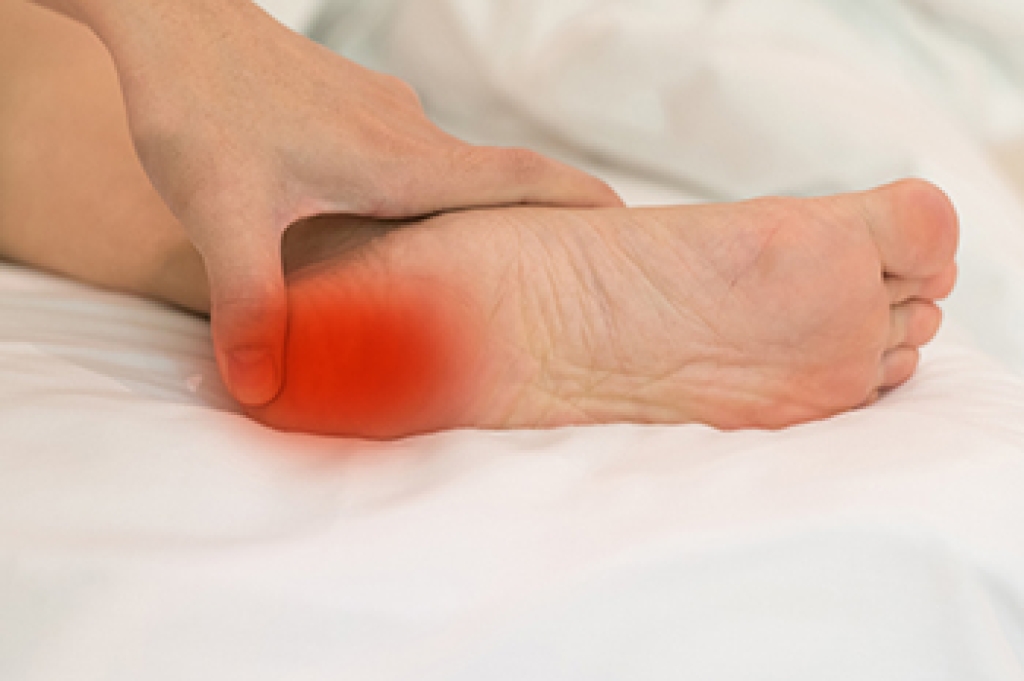
During the propulsion (toe off) stage of walking, toes bear the weight of the body as your heels rise. During this process, the toes are supported by the long, fibrous plantar fascia ligament on the bottom of the foot that connects the toes with the heel. The plantar fascia also absorbs weight and support the toes and arch when running, jumping, and dancing. Repeated stress due to overuse, obesity, improper footwear, structural anomalies in the feet, and other factors can cause the plantar fascia to become irritated, torn, and inflamed. This is a painful condition known as plantar fasciitis. The pain felt with plantar fasciitis is typically at its worst in the morning when you first wake up and begin to take your first steps. Because it is the most common form of heel pain, podiatrists see plantar fasciitis patients regularly and have a variety of options to treat it. If you are having heel pain, make an appointment with a podiatrist for an exam to get properly diagnosed and treated. 

Plantar fasciitis can be very painful and inconvenient. If you are experiencing heel pain or symptoms of plantar fasciitis, contact Queen Mbanuzue, DPM  from In Step Podiatry Center. Our doctor can provide the care you need to keep you pain-free and on your feet.

What Is Plantar Fasciitis?

Plantar fasciitis is the inflammation of the thick band of tissue that runs along the bottom of your foot, known as the plantar fascia, and causes mild to severe heel pain.

What Causes Plantar Fasciitis?

  • Excessive running
  • Non-supportive shoes
  • Overpronation
  • Repeated stretching and tearing of the plantar fascia

How Can It Be Treated?

  • Conservative measures – anti-inflammatories, ice packs, stretching exercises, physical therapy, orthotic devices
  • Shockwave therapy – sound waves are sent to the affected area to facilitate healing and are usually used for chronic cases of plantar fasciitis
  • Surgery – usually only used as a last resort when all else fails. The plantar fascia can be surgically detached from the heel

While very treatable, plantar fasciitis is definitely not something that should be ignored. Especially in severe cases, speaking to your doctor right away is highly recommended to avoid complications and severe heel pain. Your podiatrist can work with you to provide the appropriate treatment options tailored to your condition.

If you have any questions, please feel free to contact our office located in Lanham, MD . We offer the newest diagnostic and treatment technologies for all your foot care needs.
Read more about Plantar Fasciitis

Children Can Experience Heel Pain Too

It may be difficult for you to know if your child is having heel pain, because it isn’t often associated with children. However, certain conditions that cause heel pain can afflict the young, even if they don’t know how to properly communicate their distress. Sever’s disease, for instance, is a form of heel pain that stems from irritation to the growth plate in the heels of growing children. Children can also develop plantar fasciitis from overuse of the heel or by wearing shoes that don’t fit. This condition is a painful inflammation of the plantar fascia tissue where it connects to the heel on the sole of the feet. Active children can also develop tiny stress fractures of the heel bone which can occur gradually over time and be quite painful. There are certain clues your child’s condition may provide, if you know what to look for. If your child limps or changes the way they walk or run, cuts back on physical activities, complains that their feet or heels feel odd or stiff, or that something is stuck in their shoe, they may have a painful heel condition. It is suggested to make an appointment for your child with a podiatrist to have your child’s condition diagnosed and treated properly. 

Making sure that your children maintain good foot health is very important as they grow. If you have any questions, contact Queen Mbanuzue, DPM of In Step Podiatry Center. Our doctor can provide the care you need to keep you pain-free and on your feet.

Keeping Children's Feet Healthy

Having healthy feet during childhood can help prevent medical problems later in life, namely in the back and legs. As children grow, their feet require different types of care. Here are some things to consider...

Although babies do not walk yet, it is still very important to take care of their feet.

Avoid putting tight shoes or socks on his or her feet.

Allow the baby to stretch and kick his or her feet to feel comfortable.

As a toddler, kids are now on the move and begin to develop differently. At this age, toddlers are getting a feel for walking, so don’t be alarmed if your toddler is unsteady or ‘walks funny’. 

As your child gets older, it is important to teach them how to take care of their feet.

Show them proper hygiene to prevent infections such as fungus.

Be watchful for any pain or injury.

Have all injuries checked by a doctor as soon as possible.

Comfortable, protective shoes should always be worn, especially at play.

If you have any questions, please feel free to contact our office located in Lanham, MD . We offer the newest diagnostic and treatment technologies for all your foot care needs.

Read more about What to Do to Keep Your Child’s Feet Healthy